
In this guide
- DHA Lab Technician Exam: Mastering High-Yield MCQs 2026
- Deconstructing the 2026 DHA Lab Technician Exam Blueprint
- Strategic MCQ Deconstruction: In-Depth Examples & Rationales
- Building Your High-Impact Study Schedule for the Lab Tech Exam
- 5 New Practice Questions (November 2026 Update)
- Frequently Asked Questions (FAQs) for the DHA Lab Technician Exam
DHA Lab Technician Exam: Mastering High-Yield MCQs 2026
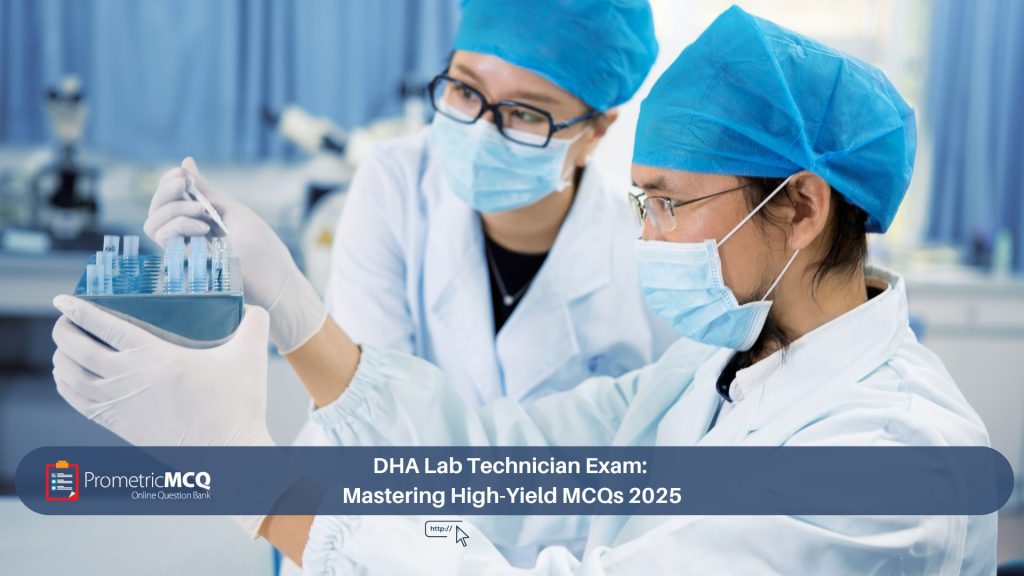
For medical laboratory technicians, a career in Dubai offers the chance to work at the forefront of diagnostic medicine. The city's world-class hospitals and clinics are equipped with cutting-edge technology, providing an environment where professional skills are both challenged and honed. The key to unlocking this career path is the Dubai Health Authority (DHA) Lab Technician Exam. This computer-based assessment is a comprehensive test of your theoretical knowledge and, more importantly, your practical problem-solving skills in a clinical laboratory setting. It is designed to ensure that every licensed technician meets the high standards of accuracy, quality, and safety that define Dubai's healthcare sector.
Last reviewed: 4 November 2026 by Dr Samer Hadad. This update adds five new practice questions with rationales.
This in-depth guide is your strategic blueprint for conquering the 2026 DHA exam. We will go beyond simple memorization, focusing instead on the critical thinking and analytical skills required to master the Multiple-Choice Questions (MCQs). This article provides a granular breakdown of the exam's content domains, an analysis of high-yield topics within each specialty, and realistic sample questions with detailed, explanatory rationales. Our aim is to equip you with a robust study framework and the confidence to excel on exam day, paving the way for a successful career as a lab technician in Dubai.
Key Takeaways for Lab Technician Exam Success
- Master the Pre-Analytical Phase: A significant number of questions focus on correct sample collection, handling, and rejection criteria. This is a core safety and quality topic.
- Know Your Reference Ranges: You must have a solid grasp of normal values for common analytes in hematology and clinical chemistry.
- Understand Quality Control (QC): Be prepared for questions on QC principles, interpreting Levey-Jennings charts, and troubleshooting out-of-control results (Westgard rules).
- Correlation is Key: The exam will test your ability to correlate lab results with clinical conditions. For example, linking specific enzyme elevations to organ damage.
- Safety First: Laboratory safety protocols, including biohazard management, chemical safety, and proper use of personal protective equipment (PPE), are frequently tested.
Deconstructing the 2026 DHA Lab Technician Exam Blueprint
A successful preparation strategy begins with a clear understanding of the exam's structure and focus areas. The DHA Lab Technician exam is a Computer-Based Test (CBT) that typically includes 150 MCQs to be answered in 165 minutes. The questions are scenario-based, requiring you to apply your knowledge to solve practical laboratory problems. Our guide on the Prometric exam for lab technicians offers valuable insights into the general format of these tests.
Content Domain Breakdown
The exam comprehensively covers all major disciplines of a modern clinical laboratory. To succeed, you must demonstrate proficiency across the board. A well-structured study plan should give adequate attention to each of these domains:
| Domain | High-Yield Topics and Concepts for 2026 |
|---|---|
| Clinical Chemistry | Organ function panels (liver, kidney, cardiac), electrolyte balance, blood gases, endocrinology (thyroid, adrenal), therapeutic drug monitoring (TDM), and principles of spectrophotometry and immunoassays. |
| Hematology & Coagulation | Complete Blood Count (CBC) interpretation, RBC/WBC/platelet morphology, diagnosis of anemias, leukemia classification basics, coagulation cascade (PT/APTT), and blood smear preparation/staining. |
| Microbiology & Parasitology | Bacterial identification (Gram stain, culture characteristics, biochemical tests), antibiotic susceptibility testing (AST), specimen processing for different culture types, identification of common parasites, and mycology/virology basics. |
| Immunology & Serology | Principles of antigen-antibody reactions, major immunoassay techniques (ELISA, chemiluminescence), testing for infectious diseases (HIV, Hepatitis), and autoimmune markers. |
| Blood Banking (Immunohematology) | ABO/Rh typing (forward and reverse), antibody screening and identification, crossmatching procedures, transfusion reactions (types, investigation), and component therapy. |
| Laboratory Operations & Quality Control | Specimen collection and processing, quality assurance vs. quality control, statistical analysis (mean, SD, CV), Levey-Jennings charts, Westgard rules, and laboratory safety protocols (OSHA, biohazards). |
For every lab test you study, ask yourself three questions: 1. What is the correct specimen type and anticoagulant? 2. What clinical condition causes it to increase or decrease? 3. What common interferences can affect the result?
Strategic MCQ Deconstruction: In-Depth Examples & Rationales
Mastering the exam requires you to think critically about each clinical scenario. Let's break down the types of questions you'll encounter. The most effective preparation involves working through a dedicated DHA medical laboratory exam QBank.
1. The "Result Interpretation & Correlation" Question
Sample Question 1: Hematology
A complete blood count (CBC) from a 60-year-old male shows the following results: WBC: 3.0 x 10^9/L, Hgb: 8.5 g/dL, MCV: 115 fL, Plt: 90 x 10^9/L. The peripheral blood smear shows hypersegmented neutrophils. Which of the following is the most likely cause of these findings?
- Iron Deficiency Anemia
- Vitamin B12 or Folate Deficiency
- Anemia of Chronic Disease
- Thalassemia
Correct Answer: B
Rationale: This is a classic presentation of megaloblastic anemia. The key features are pancytopenia (low WBC, Hgb, and platelets), a markedly high MCV (macrocytosis), and the pathognomonic finding of hypersegmented neutrophils on the smear. This constellation of results is caused by impaired DNA synthesis, most commonly due to a deficiency in Vitamin B12 or folate.
Why other options are incorrect:
A: Iron deficiency anemia is a microcytic anemia, meaning the MCV would be low (typically <80 fL).
C: Anemia of chronic disease is typically a normocytic, normochromic anemia (normal MCV).
D: Thalassemia is a microcytic anemia (low MCV) characterized by abnormalities in hemoglobin production, not impaired DNA synthesis.
2. The "Best Next Step / Troubleshooting" Question
Sample Question 2: Clinical Chemistry/QC
The morning run of the high-level chemistry quality control material shows a result for glucose that is 3 standard deviations (SD) above the mean. This is the first time this has occurred. According to Westgard rules, what is the most appropriate immediate action?
- Report all patient results as the low and normal controls are acceptable.
- Recalibrate the instrument and repeat the high control.
- Reject the entire run and hold all patient results.
- Check the expiration date of the reagent and control material.
Correct Answer: C
Rationale: A single control result exceeding the mean by ±3 SD is a violation of the Westgard 1-3s rule. This is a rejection rule, indicating a random or significant systemic error. The correct protocol is to reject the run, meaning no patient results from that run can be reported. The technician must then begin troubleshooting the problem before re-running the control and any affected patient samples.
Why other options are incorrect:
A: Reporting patient results when a control has failed is a major violation of laboratory practice and compromises patient safety.
B & D: While recalibration and checking expiration dates are valid troubleshooting steps, the *most appropriate immediate action* after identifying a rejection rule violation is to reject the run and halt reporting. Troubleshooting follows this critical first step.
3. The "Identify the Organism" Question
Sample Question 3: Microbiology
A Gram stain performed on a cerebrospinal fluid (CSF) sample from a patient with suspected meningitis reveals Gram-negative diplococci. The organism grows on chocolate agar but not on blood agar and is oxidase-positive. Which organism is most likely the cause of the infection?
- Streptococcus pneumoniae
- Staphylococcus aureus
- Neisseria meningitidis
- Haemophilus influenzae
Correct Answer: C
Rationale: The combination of Gram-negative diplococci seen in a CSF sample is highly suggestive of Neisseria meningitidis. This is confirmed by its characteristic growth pattern: it is a fastidious organism that requires the enriched medium of chocolate agar (which contains heated blood products like Factor X and V) and will not grow on standard blood agar. Its positive oxidase test is another key identifying feature.
Why other options are incorrect:
A: Streptococcus pneumoniae is a Gram-positive diplococcus.
B: Staphylococcus aureus is a Gram-positive coccus, typically seen in clusters.
D: Haemophilus influenzae is a Gram-negative coccobacillus (short rod), not a diplococcus, although it also grows on chocolate agar.
Building Your High-Impact Study Schedule for the Lab Tech Exam
A structured, disciplined approach is essential for covering the breadth and depth of the clinical laboratory sciences. A successful plan is the foundation of your DHA Prometric exam preparation.
- Phase 1: Foundational Knowledge Reinforcement (6 weeks): Dedicate one week to each major laboratory discipline (Chemistry, Hematology, Microbiology, Blood Bank, etc.). Use a comprehensive review textbook (like the BOC Study Guide) to solidify core concepts, principles of testing, and disease state correlations. Create flashcards for reference ranges and key organism characteristics.
- Phase 2: High-Volume MCQ Practice (6 weeks): This is where you build exam-specific skills. Subscribe to a high-quality QBank specifically for medical laboratory science. Start with 50-question blocks in tutor mode to learn from the rationales. As you gain confidence, switch to timed blocks to improve your speed and decision-making under pressure. Aim to complete at least 2,000 questions.
- Phase 3: Final Review and Simulation (2-3 weeks): Use your QBank's performance metrics to identify your weakest areas. Spend this time doing a targeted review of those topics. Take at least two full-length mock exams (150 questions, 165 minutes) to simulate the actual test day experience, focusing on time management and endurance.
5 New Practice Questions (November 2026 Update)
Use these fresh questions to test yourself before your Prometric exam. Cover the options, pick your answer, then read the rationale. For hundreds more, see our DHA Lab MCQs question banks.
New Practice Question 1
Gram-positive cocci in clusters that are catalase-positive and coagulase-positive are most likely:
- Streptococcus pyogenes
- Staphylococcus aureus
- Staphylococcus epidermidis
- Enterococcus faecalis
Answer: B. Staphylococcus aureus. Coagulase separates S. aureus from coagulase-negative staphylococci such as S. epidermidis. Streptococci are catalase-negative.
New Practice Question 2
Which supravital stain is used to count reticulocytes?
- Wright stain
- New methylene blue
- Gram stain
- Periodic acid–Schiff
Answer: B. New methylene blue. New methylene blue (or brilliant cresyl blue) precipitates residual RNA in reticulocytes.
New Practice Question 3
What blood-to-anticoagulant ratio is required in a sodium citrate (light blue) tube for coagulation tests?
- 4:1
- 9:1
- 1:1
- 20:1
Answer: B. 9:1. A 9:1 ratio is essential. Under-filled tubes give falsely prolonged PT and aPTT.
New Practice Question 4
The Ziehl–Neelsen stain is mainly used to detect:
- Fungi
- Acid-fast bacilli such as Mycobacterium tuberculosis
- Gram-negative rods
- Spirochaetes
Answer: B. Acid-fast bacilli such as Mycobacterium tuberculosis. Ziehl–Neelsen stains acid-fast organisms red against a blue background.
New Practice Question 5
HbA1c reflects average blood glucose over approximately the previous:
- 1 week
- 2–3 months
- 6 months
- 1 year
Answer: B. 2–3 months. HbA1c mirrors the lifespan of red cells (about 120 days), weighted towards the last 2–3 months.
[pmcq_cta title="Want 100s more questions like these?" text="Full question bank with answers and explanations, updated for 2026." button="Start Practising Now" url="https://www.prometricmcq.com/dha-medical-laboratory-exam-mcqs/"]Frequently Asked Questions (FAQs) for the DHA Lab Technician Exam
What is the passing score for the DHA Lab Technician exam?
The exam is scored on a Pass/Fail basis. The DHA does not announce a specific percentage, but the industry standard for passing is generally considered to be around 60%. To ensure you are well-prepared, you should aim for consistent scores of 70% or higher on your practice exams.
How much of the exam is focused on Quality Control?
Quality Control and Laboratory Operations are a significant component. While not the largest section, questions related to QC, safety, and pre-analytical variables are woven throughout all disciplines. You must have a strong understanding of Westgard rules, delta checks, and specimen rejection criteria.
Do I need to memorize all the Westgard rules?
You should absolutely memorize and understand the most common rules, especially the "rejection" or "stop" rules like 1-3s, 2-2s, and R-4s. You should also be able to recognize "warning" rules like 1-2s and differentiate between random and systemic error based on the pattern of QC data.
Are there picture-based questions on the exam?
Yes, it is common to have questions that include images. You may be shown pictures of peripheral blood smears (e.g., to identify specific cell morphology like sickle cells or toxic granulation), Gram stains, or parasite ova. It is crucial to practice with visual materials.
Which international standards are relevant for the DHA exam?
The exam is based on global best practices in laboratory medicine. Familiarity with guidelines from organizations like the Clinical and Laboratory Standards Institute (CLSI) is highly beneficial, as their standards for specimen collection, testing procedures, and quality control are internationally recognized.
How important is blood banking (immunohematology)?
Blood banking is a high-stakes, critical area. Questions in this domain are very common. You must be proficient in ABO/Rh typing (including discrepancy resolution), antibody identification, and the principles of crossmatching. Transfusion reaction investigation is a particularly high-yield topic.
What happens after I pass the DHA exam?
Upon passing, you will be issued an eligibility letter. You must then successfully complete the Primary Source Verification (PSV) process via the DataFlow Group. Once you secure a job with a DHA-licensed facility, your employer will finalize the activation of your professional DHA license.
How many times can I take the exam if I don't pass?
Candidates are typically allowed a total of three attempts to pass the exam. If you are unsuccessful after three attempts, you may need to provide proof of further training or experience before being permitted to reapply. Always verify the most current regulations directly with the DHA.
Should I guess if I don't know the answer?
Yes. The exam does not have negative marking. Your score is based only on the number of correct answers. Never leave a question unanswered. Use the process of elimination to improve your chances and make an educated guess.
What identification is required on the day of the exam?
You must bring your original, valid passport. The name on the passport must exactly match the name on your exam registration. No other forms of ID are accepted. The testing center will provide a locker for all personal belongings.
Conclusion: Your Role in Dubai's Healthcare Future
The DHA Lab Technician Exam is a rigorous benchmark designed to ensure that laboratory professionals in Dubai possess the skills and knowledge necessary for exceptional patient care. Success is not a matter of luck but the result of a structured, dedicated, and strategic approach to preparation. By focusing on high-yield topics, mastering the art of MCQ analysis, and committing to a disciplined study schedule, you will be well-positioned to not only pass the exam but to excel as a key member of a world-class healthcare team.

The PrometricMCQ editorial team writes independent guides for healthcare professionals preparing for Gulf licensing exams. Editorial policy